Refrigerator Repair
Sub-Zero Refrigerator Leaking Water: Read Where It Pools
A Sub-Zero refrigerator leaking water usually has a blocked defrost drain, a shifted drain pan, a loose ice maker water line or a worn door gasket. Where the water collects tells you which one, and what you can safely check before calling.
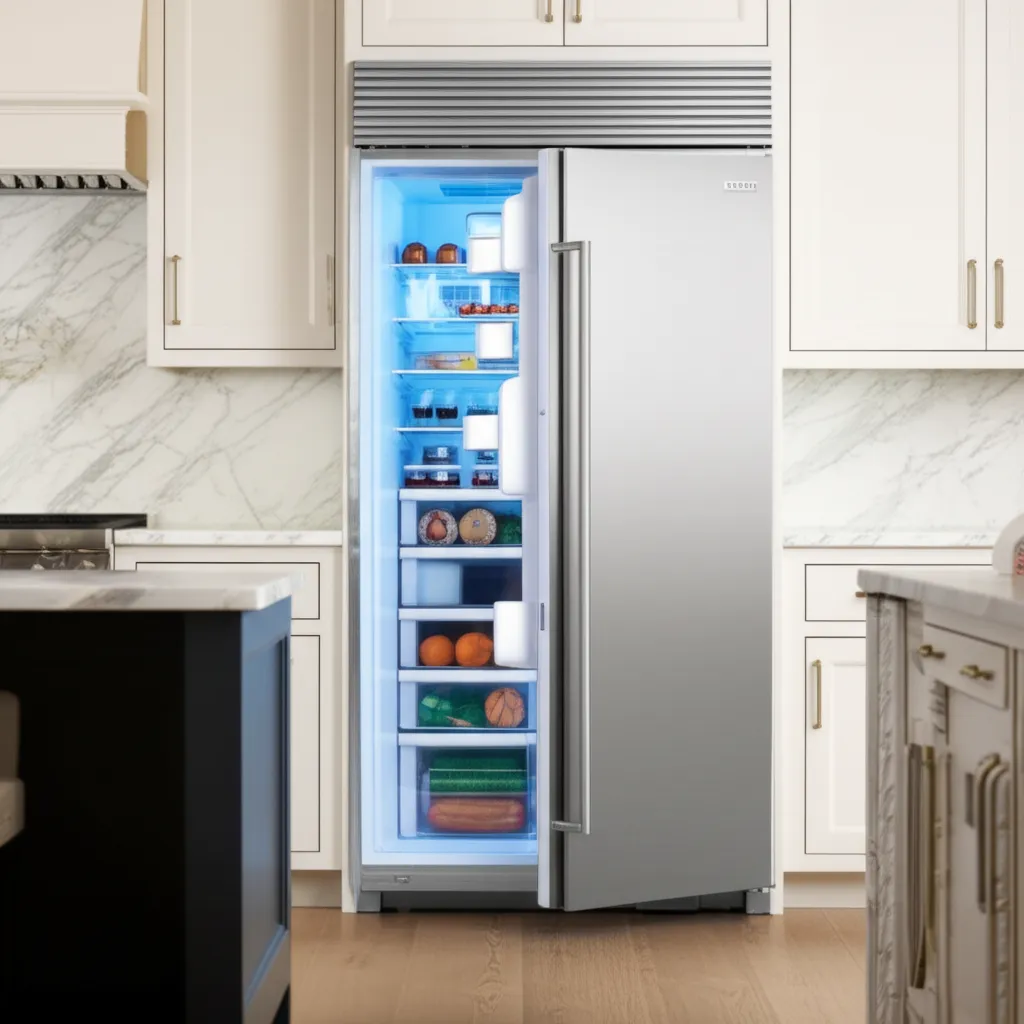
When a Sub-Zero refrigerator is leaking water, the place the water collects points straight at the cause. Water pooling under the crisper drawers, or a sheet of ice forming on the freezer floor, nearly always means the defrost drain is blocked. A puddle creeping out from under the toe kick is usually the drain pan or the ice maker water line. Drips running off the bottom of a door come from humid air slipping past a tired gasket. A day of watching with a few paper towels narrows most of these down, and none should be left for long, because a built-in unit sits inside cabinetry that soaks up water without complaint.
In a Brookline condo or two-family house, the first sign of a slow refrigerator leak is sometimes a stain on the ceiling of the unit below, so it pays to look before the floor tells you.
Map where the water shows up
Start dry. Wipe every shelf, drawer bin and compartment floor, mop the floor in front of the unit, and lay a strip of paper towel along the base and down each side you can reach. Look again after a few hours and once more the next morning, and make a note of what is wet and when.
The timing tells you as much as the location. Water that appears right after the ice maker refills points to the water supply. Water that turns up every several hours, whether or not anyone has opened a door, points to defrost meltwater. Moisture that only appears on muggy afternoons after a busy stretch of door openings points to condensation. If the floor stays wet with the ice maker water shut off, look past the refrigerator: a sink trap or dishwasher line next door can pool in the same spot.
Water inside: a blocked defrost drain
Every few hours a frost-free refrigerator warms its cooling coil to melt off the frost that builds on it. The meltwater runs into a trough, down a drain tube and into a pan in the machine compartment, where warmth from the condenser evaporates it. When the drain opening clogs with a crumb of food, a bit of packaging or ice, that water has nowhere to go. On the fresh-food side it collects under the crisper drawers or trickles down the back wall. In the freezer it hardens into ice across the floor of the compartment, and some of it finds its way out under the door.
A drain that keeps freezing shut is telling you something. The usual culprit is a defrost heater, thermostat or sensor that no longer does its job, so the coil never fully clears and the drain ices over again a few days after you thaw it. Melting the ice and mopping up buys time but does not cure anything. Repairs on the defrost circuit typically land between $300–$670, with a firm figure once the failed part has been identified.
Water on the floor: the drain pan and the water line
A puddle spreading from under the front of the unit has two common sources. The first is the drain pan itself. Pans crack, get nudged out of position during a cleaning, or end up sitting under a drain tube that has slipped off its fitting, so defrost water lands on the floor instead. That kind of leak comes and goes with the defrost cycle and tends to leave a modest puddle a few times a day.
The second source is the water supply feeding the ice maker and, on some models, a dispenser or filter. A compression nut that has worked loose, a pinhole in an aging copper or plastic line, a cracked filter housing or a failing inlet valve can all leak steadily, and a steady leak does the most harm hidden behind panels. Close the shutoff valve that feeds the ice maker, often under the nearest sink or in the basement, and see whether the dripping stops. Ice maker, water valve and supply line repairs usually run $310–$680. If your ice output has also slowed, our guide to a Sub-Zero ice maker producing less ice walks through the fill side in more detail.
Water at the door: gaskets and condensation
Beads of moisture on the door frame, water running down the cabinet face, or a drip off the bottom edge of a door all mean warm room air is reaching cold surfaces. A gasket that has flattened, split or stiffened leaves a gap. So does a door that no longer swings fully closed because a shelf is overloaded, a tall bottle is in the way or the cabinet has settled out of level. Humid summer weather makes every one of these worse.
Close the door on a dollar bill at several points around the edge and pull it out each time. You should feel drag. Where the bill slides out freely, the seal has stopped sealing. Then open the door a few inches and let go; it should finish closing on its own. Gasket replacement typically costs $270–$740, depending on the door size and the seal. A weak seal left alone also feeds the coil extra frost, which can lead straight back to the blocked drain described above.
What you can check yourself, and what to leave alone
Several checks are safe for any homeowner:
- Dry the unit and track where new water appears.
- Clear the area under the crisper drawers and look for a small drain opening; if one is visible and reachable, a few spoonfuls of warm water poured slowly can loosen a soft clog. Stop if it backs up.
- Test the gasket and make sure nothing inside stops the door from closing.
- Turn the ice maker off and close its supply valve.
- Reseat a filter cartridge that looks crooked or loose.
- If water is near an outlet or the base grille, switch the unit off at the breaker before you mop.
Other jobs belong to a technician. A built-in Sub-Zero is heavy, fixed into its opening with anti-tip hardware and often wrapped in custom panels, so sliding it out to reach the pan or the back of the line risks the flooring, the cabinets and the tubing on the unit itself. Never chip at freezer ice with a knife or screwdriver: a punctured coil turns a modest repair into a sealed-system job, which runs $1,020–$2,230. Skip boiling water and keep a hair dryer well back from plastic liners.
When to call, and what a visit involves
Book a visit if the drain refills with ice after you have thawed it, if a steady leak continues with the ice maker supply closed, if water has reached an outlet or the floor below, or if temperatures inside start drifting up while the leak goes on.
The visit costs $95, which pays for the trip and a full diagnosis, and that amount comes off the bill if you decide to go ahead with the repair. Tell the technician where you found water and at what times; your paper towel notes shorten the search. We handle Sub-Zero refrigerator repair across Brookline, Back Bay, Jamaica Plain and the South End. Call (617) 340-2816 to set up a time.
Still asked afterwards
Why is my Sub-Zero leaking water from the bottom?
Water at the bottom usually comes from the drain pan or the ice maker water line. A cracked or shifted pan, or a drain tube that has slipped off, sends defrost water to the floor a few times a day. A steady drip points more often to the supply line or inlet valve, so close the ice maker shutoff and watch whether it stops.
Why is there water under the crisper drawers in my Sub-Zero?
Water under the crisper drawers means defrost meltwater cannot get into the drain. Debris or ice has plugged the opening, so the water pools in the compartment instead of running down to the pan. If the drain ices over again within days of thawing it, the defrost heater, thermostat or sensor probably needs a technician.
Is it safe to keep using a Sub-Zero that is leaking?
For a day or two it usually is, provided the water stays well away from outlets and you keep the floor dry. Shut off the ice maker supply if the line could be involved. A steady leak behind cabinetry, or one reaching a ceiling below, deserves a prompt visit because the damage grows where you cannot see it.
Can a worn door gasket make a Sub-Zero drip?
Yes, a tired gasket lets humid room air reach cold surfaces, so moisture condenses on the cabinet face and can drip off the bottom of the door. It also loads the coil with extra frost. Close the door on a dollar bill at several points; anywhere it slides out freely, the seal is letting air through.